MANCO Project has received funding from the European Union’s Horizon 2020 research and innovation programme under grant agreement No 101003651

Understanding the flow of accounts receivable involves recognizing how transactions affect the account. The T-account for accounts receivable starts with a beginning balance, adds credit sales, and subtracts cash collections and write-offs. Write-offs occur when contra asset account an account is deemed uncollectible, which decreases the accounts receivable balance. Let’s assume that a company has a debit balance in Accounts Receivable of $120,500 as a result of having sold goods on credit.
Accounts Receivable: The Money You’re Owed (But Don’t Have Yet)

An allowance for doubtful accounts is considered a “contra asset,” because it reduces the amount of an asset, in this case the accounts receivable. The allowance, sometimes called a bad debt reserve, represents management’s estimate of the amount of accounts receivable that will not be paid by customers. The Allowance for Doubtful Accounts is a balance sheet contra asset account that reduces the reported amount of accounts receivable. Moreover, automated systems can ensure timely reminders for outstanding invoices and facilitate the real-time management of credit terms and collections.
- Companies with a long operating history may rely on their long-term average of uncollectible accounts.
- At the end of each period, update your allowance with adjusting entries so your expenses match revenue (hello, matching principle!).
- This loss expectation is critical for creditors assessing a company’s short-term liquidity.
- The company anticipates that some customers will not be able to pay the full amount and estimates that $50,000 will not be converted to cash.
- The allowance for doubtful accounts is also known as the allowance for bad debt and bad debt allowance.
- Firstly, it enhances the accuracy of financial reporting, providing stakeholders with a clear and realistic view of the company’s financial health.
What is the aging of receivables method and how is it used?
- The allowance for doubtful accounts is a contra asset account, and so is listed as a deduction immediately below the accounts receivable line item in the balance sheet.
- This practice allows businesses to manage risk proactively, align with accounting standards, and provide stakeholders with transparent financial insights.
- Proactively managing receivables and the allowance for doubtful accounts is your ticket to financial stability—and fewer surprises when your clients disappear into the night.
- The bad debt expense is entered as a debit to increase the expense, whereas the allowance for doubtful accounts is a credit to increase the contra-asset balance.
- The allowance represents management’s best estimate of the amount of accounts receivable that will not be paid by customers.
- For the past 52 years, Harold Averkamp (CPA, MBA) hasworked as an accounting supervisor, manager, consultant, university instructor, and innovator in teaching accounting online.
- Auditors look for this issue by comparing the size of the allowance to gross sales over a period of time, to see if there are any major changes in the proportion.
Skip the allowance and your financial statements will look like you’re rolling in cash—even if you’re petty cash not. Overstated assets and revenue are a one-way ticket to bad investments and investor disappointment. Note that the accounts receivable (A/R) account is NOT credited, but rather the allowance account for doubtful accounts, which indirectly reduces A/R. The most prevalent approach — called the “percent of sales method” — uses a pre-determined percentage of total sales assumption to forecast the uncollectible credit sales. The initial entry to establish or replenish the reserve requires a debit to Bad Debt Expense and a corresponding credit to the Allowance for Doubtful Accounts.
Direct Write-Off Method
- The Allowance Method is an accounting approach favored for its adherence to the matching principle, ensuring expenses and revenues are recorded in the same period.
- The allowance for doubtful accounts is a company’s educated guess about how much customers owe that will never come in.
- Generally Accepted Accounting Principles (GAAP) mandates the use of an allowance account to adhere to the matching principle, ensuring that expenses are recognized in the same period as the related revenues.
- By maintaining clear communication and providing excellent service, companies can mitigate the risk of bad debt and enhance liquidity management.
In accounting, Grocery Store Accounting managing accounts receivable is crucial for understanding a company’s financial health. When a company sells items on account, it records the total amount in accounts receivable. For instance, if accounts receivable totals \$12,000, but the company estimates that \$800 will be uncollectible, this amount is recognized as bad debt expense (BDE). The BDE of \$800 is recorded as an expense on the income statement, which reduces the company’s equity.

AccountingTools

If a company reports $500,000 in gross Accounts Receivable and maintains an ADA balance of $25,000, the calculation is straightforward. This $475,000 figure is the amount reported to investors and creditors as the true liquid asset. Uncover the accounting principles behind ADA, its contra asset classification, and how it ensures accurate valuation of accounts receivable. When a specific customer account is deemed uncollectible—perhaps after multiple failed collection attempts, legal action, or bankruptcy—the company removes that balance from both AR and the allowance. As time passes, companies gain better information about which accounts might not be collected. Economic conditions change, customer payment patterns evolve, and the receivables balance fluctuates.
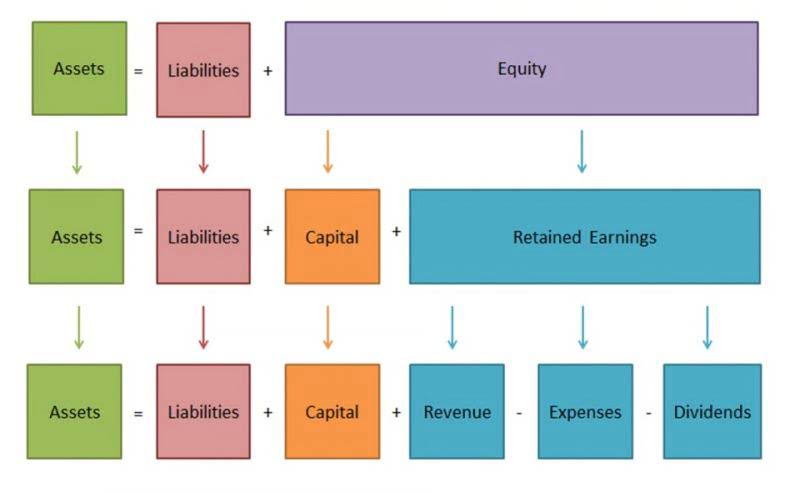
Understanding how businesses account for potential failures to pay makes how a firm manages risk far clearer. The allowance method estimates the “bad debt” expense near the end of a period and relies on adjusting entries to write off certain customer accounts determined as uncollectable. The projected bad debt expense is matched to the same period as the sale itself so that a more accurate portrayal of revenue and expenses is recorded on financial statements. It’s a sad but true fact that, from time to time, a company might not be able to collect all the money owed it. The term “receivables” refers to the amount of money the company expects to collect from customers who purchased goods or services on credit.
What Are Fixed Assets on a Balance Sheet?
This allowance ensures that the accounts receivable on the balance sheet are not overstated, giving a more accurate picture of expected cash inflows and improving financial reporting accuracy. Bad debt expense affects taxable income, as it reduces the overall revenue reported. According to GAAP accounting standards, companies must follow specific guidelines to account for bad debt. Schedule C, which details profit or loss from business, includes adjustments for bad debt expense. Accurate valuation of liabilities and reserve accounts ensures compliance with generally accepted accounting principles (GAAP).
This method is a bit more nuanced since it recognizes that the longer an invoice remains unpaid, the less likely it is to be collected—it’s not just applying a raw percentage to all credit sales. Companies sort their AR by age categories and apply increasingly higher percentages to the older ones. Welcome to the world of allowance for doubtful accounts—the accounting equivalent of admitting some people just won’t pay up, but doing it with style (and a spreadsheet). GAAP since the expense is recognized in a different period as when the revenue was earned. Companies can refine their projections of allowance for doubtful accounts over time if they find they are consistently underestimating or overestimating it. Crucially, the write-off entry does not affect the Bad Debt Expense account, nor does it change the Net Realizable Value of the receivables.

 MANCO Project has received funding from the European Union’s Horizon 2020 research and innovation programme under grant agreement No 101003651
Realised by 